Bringing Gathering Press to CoLab Dudley
An introduction to a residency with a mobile printing press at CoLab Dudley, by artist Laura Onions.

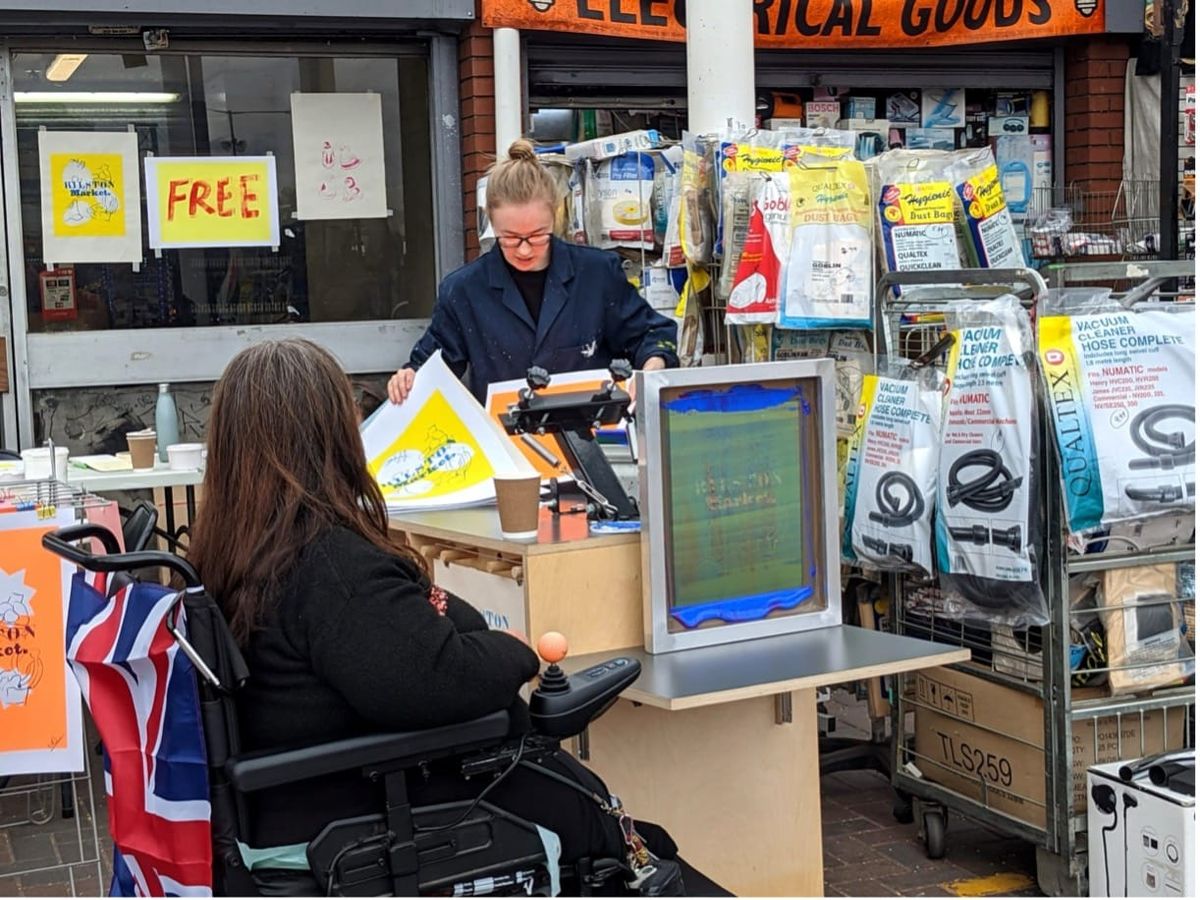
Gathering Press is a mobile screen-printing unit and project that will be in residence at CoLab Dudley from February – May 2026, activated through a series of drop-in workshops.
There is a map in my head of the journeys Gathering Press has taken and I have thought in the past about the relationship between its roving nature and the slow formation of a speculative cartography - held in its body, materials, its scuffs, worn down wheels and the fragments of things made on its shelves that resonate with the environments it has encountered and the people who have left their mark upon it - an alternative spatial lens that exploring counter-mapping practices with the Bioregional Learning Network has placed in a new light for me.
Understanding bioregioning as a practice - ‘a journey of connection, learning and action’ located in place, deeply connects to the process and histories of printmaking and the language of Gathering Press. However, learning bioregionally invites reflection upon printmaking’s complex relationships with place - formed of ecosystems and human systems, an embeddedness in local production and circulation. These thoughts have been weaving together as we have built up to this residency period on Dudley High Street, with some key threads of enquiry:
- How can printmaking visually map the ecological and cultural features of a specific bioregion?
- Can prints function as “bioregional documents” that archive local knowledge
- How does reproducibility allow place-based narratives to circulate within and beyond the region?
Like all the installations and exhibitions at Co-Lab Dudley, seeing the press in the window amongst the shops that surround it introduces a different way of being and commoning on the high street. Here the inspiration from feminist printmaking collectives of the 70s and 80s resonate - when people came together in screen-printing workshops to share knowledge of the material process to “activate their social activism” whilst self-actualising as individuals and community in the doing.
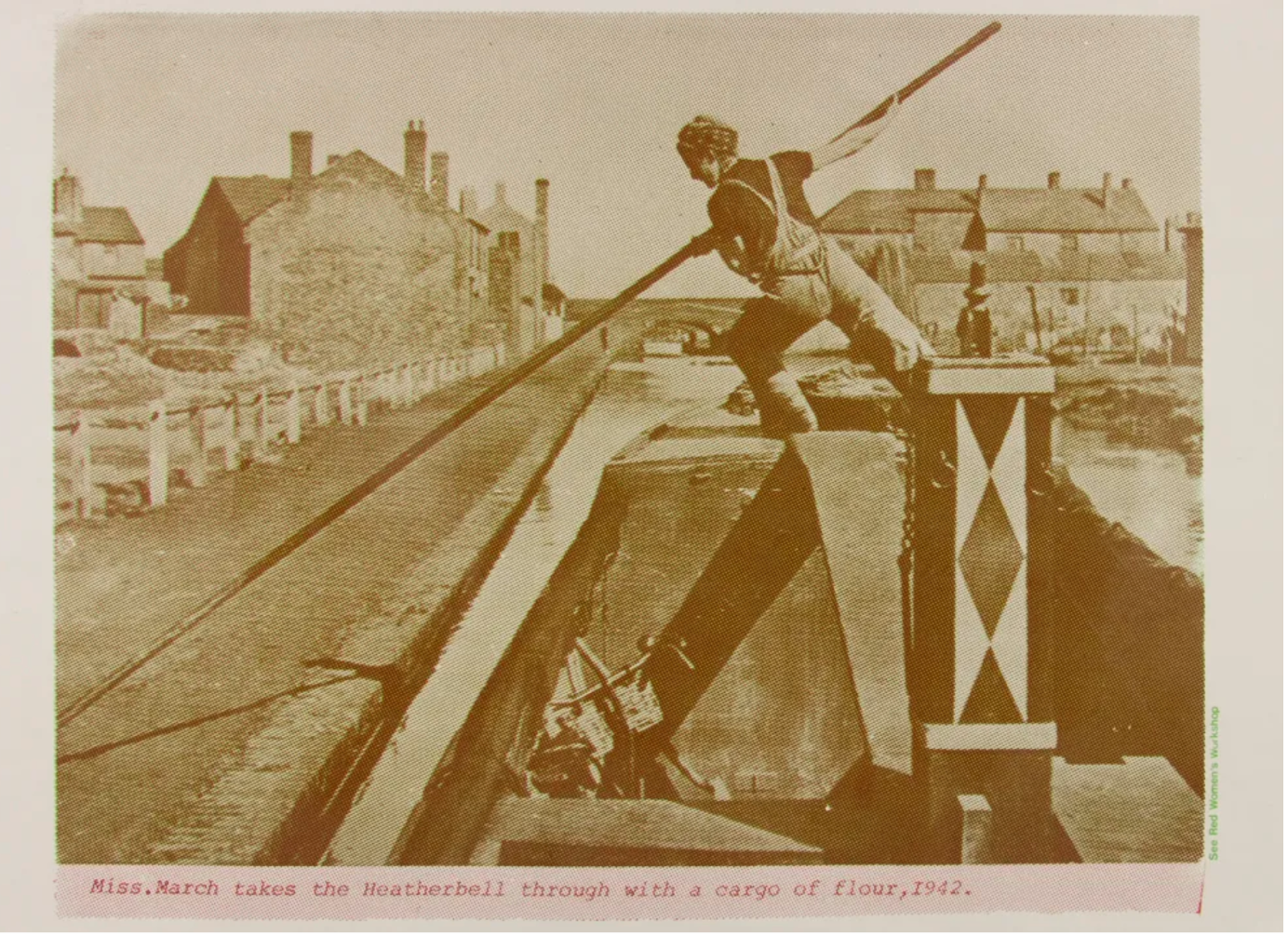
The embodied process of printmaking and discovery through materials is reframed through a bioregional lens. Screen printing is often a slow, process-oriented practice that mirrors cycles of preparation, transfer, and repetition. Central to this research is the post-industrial, geologic and new materials within our bioregion, what may be locally sourced or in alignment with ecological ethics, to inhabit a slow practice, and an attunement to seasonal rhythms - can iterative print processes reflect ecological cycles (growth, decay, regeneration)?
What continues to surface through Gathering Press is connecting with local archival materials as an active tool to explore current issues. But this may also enable us to understand the strata of place and discover our bioregionality.
Based on photographic and historic accounts, protests against toxic waste in the late 1980s and early 1990s took place in Dudley and the wider Black County region. With the rise of environmental awareness in the 1970s, campaigns against industrial land contamination, landfill sites and the impacts of dangerous chemical waste joined together residents to challenge government backed licencing of Incineration companies burning low-level radioactive waste. In addition, the accumulated legacies of past industries that contaminated water systems and canal networks. We see community protest, silent vigils, lobbying and volunteering in these archives, and the landscape that encouraged them to act. Understanding the bioregion, the flow of water, topographies and human systems that form part of this, illuminates our interconnectedness with nature across time.
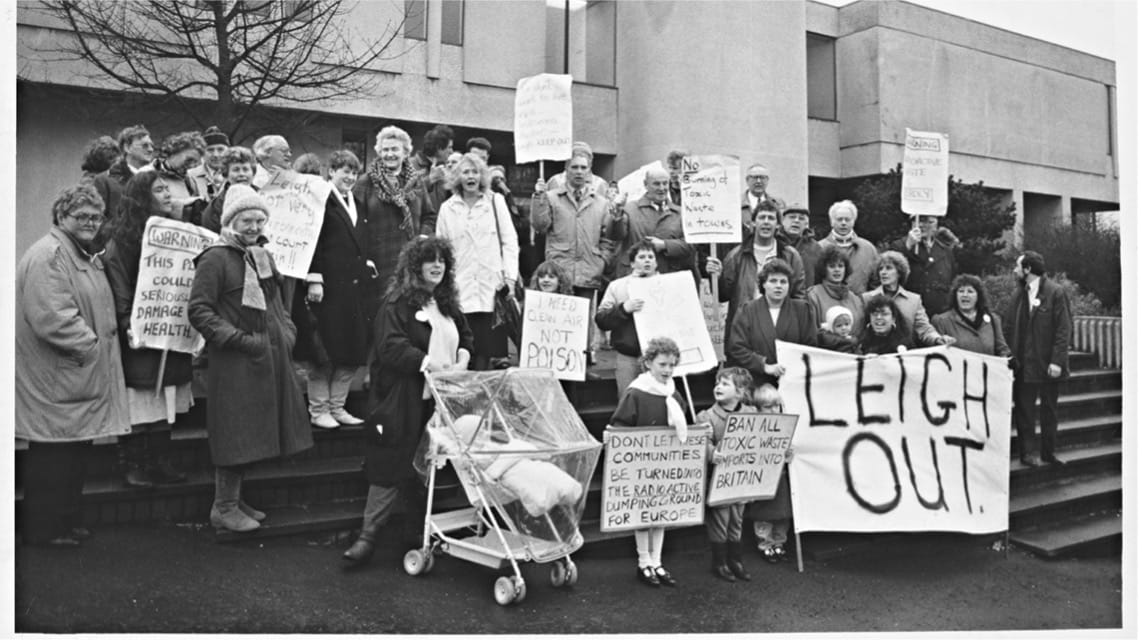
If ecological boundaries extend also to histories, cultures and events, re-printing with archival research (institutional and personal) may offer a tangible method of reconnection and interaction, so we may process what we reproduce. Knowledge, emotions, behaviours, politics – how could the multiplicity of printmaking reflect collective – rather than individual experience?