Regenerative Evaluation
What if evaluation was an emergent practice of stewardship towards co-created futures?
A practice which is active, living alongside people and woven through doing. Rather than an extractive, static intervention which takes place after activity.
Instead of asking whether an intervention “worked,” we might ask how it contributed to the conditions for continued flourishing. Instead of reporting outcomes in isolation, we could trace the patterns that connect them...
Evidence is necessary to stay honest with ourselves and have awareness of the reality ahead of us. In this light, metrics evolve from policing impact into instruments of learning and collective alignment...
I believe we’re moving toward a world in which evaluation functions as an act of stewardship: of emergent potential and of the collective futures we aspire to create.
Laila Martins, in Regenerative Evaluation: Influences Pathways and Practices. 2026
CoLab Dudley's approach to evaluation is rooted in principles. Not as fixed rules, but as guides that help us navigate complexity, uncertainty, and change. Our principles shape how we understand and work with change. You can explore them in more detail here.
This way of working has been shaped by Principles Focused Evaluation, developed by Michael Quinn Patton, and by our own ongoing practice, learning, and reflection.
Where this began
Our journey started with a simple question:
What really matters to us in this work?
In 2018, we began having open, honest conversations as a team, exploring our values, our experiences, and the kinds of futures we wanted to help create. From this, our principles emerged. They have continued to evolve, shaped by practice, reflection, research, and the wider communities and networks we are part of.
Working with principles
We draw on Michael Quinn Patton’s guidance that strong principles should be:
- guiding
- useful
- inspiring
- able to evolve (developmental)
- open to reflection and learning (evaluable)
We sometimes call these our GUIDEing principles.
We also name what it looks like when we are not in alignment - as a way of noticing when something feels off, or when we may be slipping back into ways of working that don’t serve our intentions.
Working with change
We understand that change (especially cultural change) is:
- collective
- uneven
- messy
- contextual
- always evolving
Because of this, we don’t evaluate our work against fixed outcomes alone.
Instead, we pay attention. We ask questions like:
- How are we showing up in relation to our principles?
- What is beginning to shift, in expected and unexpected ways?
- What ripples are emerging from the work?
These ripples might be small, or hard to measure, or only visible over time. But they matter in work like ours.
What we pay attention to
We gather and reflect on different kinds of evidence:
- how closely our work aligns with our principles
- what changes we can begin to notice—individually, collectively, and in place
- how ideas, practices, and relationships are spreading and deepening.
We are also interested in what is sometimes called scaling deep - how ways of thinking, relating, and being begin to shift beneath the surface.
Learning as part of the work
For us, evaluation is not something separate from the work. It is part of how we learn.
We learn:
- to improve what we do
- to inform new creative and cultural action
- to deepen our relationships - with place, and with each other.
This means our approach is developmental rather than summative. Not focused only on judging what has happened, but on supporting what is emerging.
A different kind of rigour
This way of working still requires rigour. But it is a different kind of rigour to that many of us are accustomed to. It isn't based on prediction and control, but on attention, reflection, and collective sense-making. It asks us to stay present, to notice carefully, and to learn as we go.
These ways of working come to life through our principles: in how we care, connect, imagine, and learn together.
↗ Explore our principles
↗ learning and evaluation - this collection of Lab Notes documents our journey with evaluation, which is ever-evolving.
An evaluation enquiry
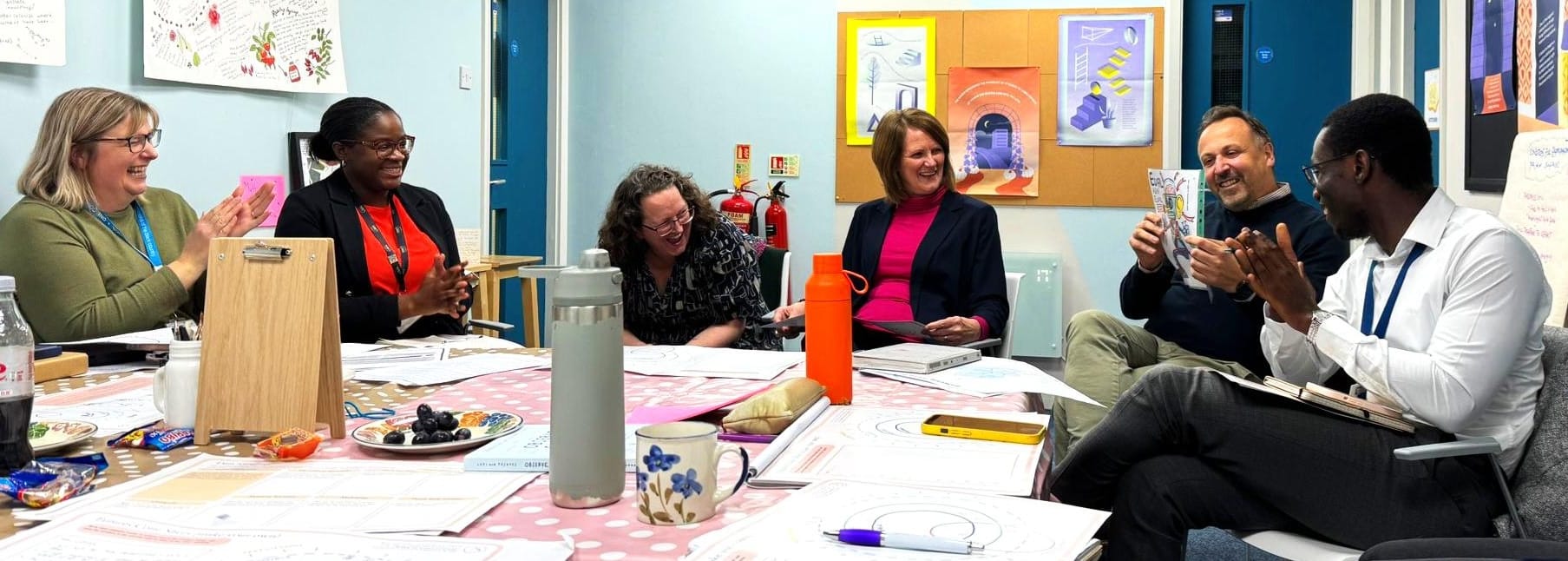
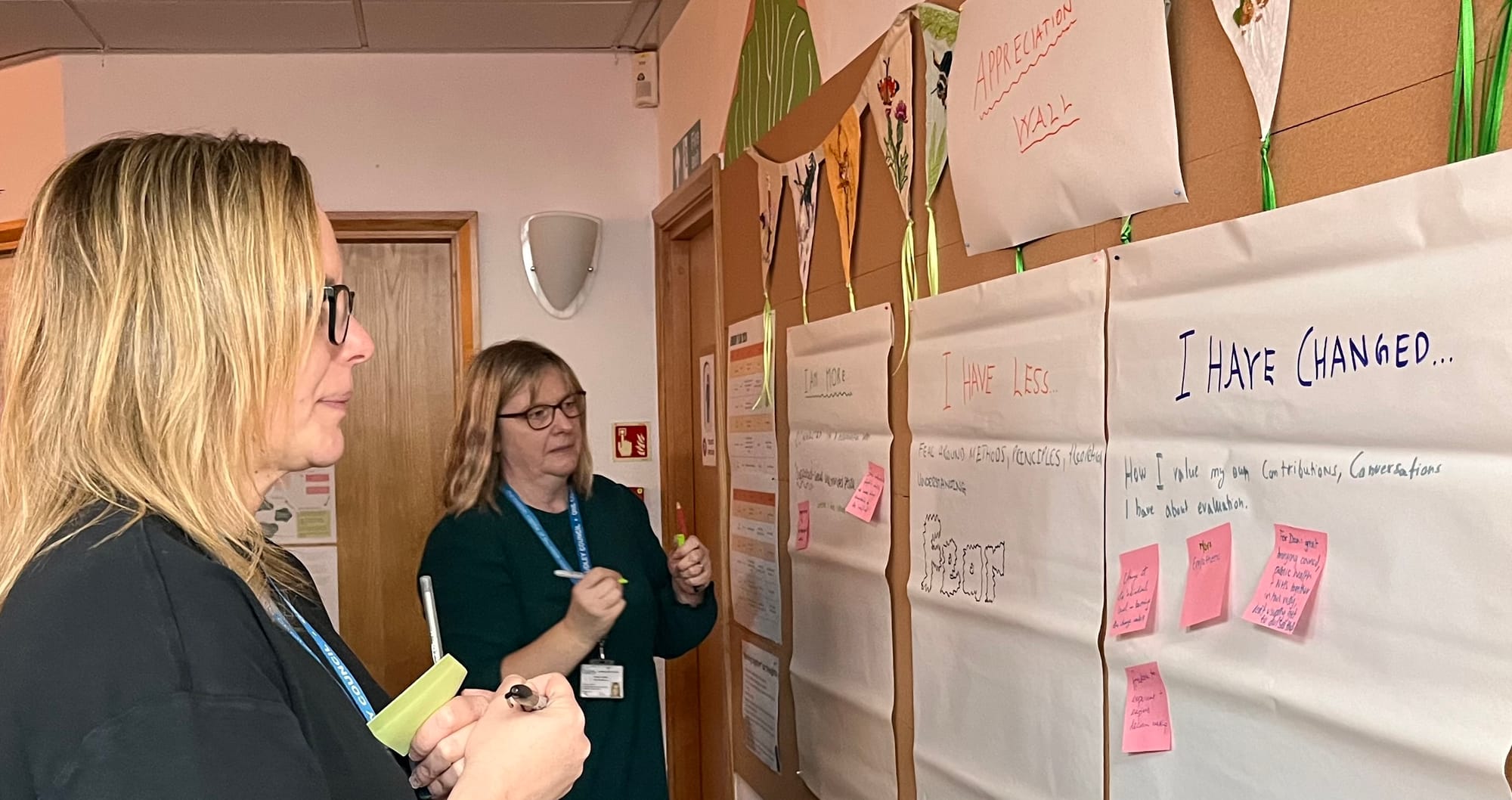
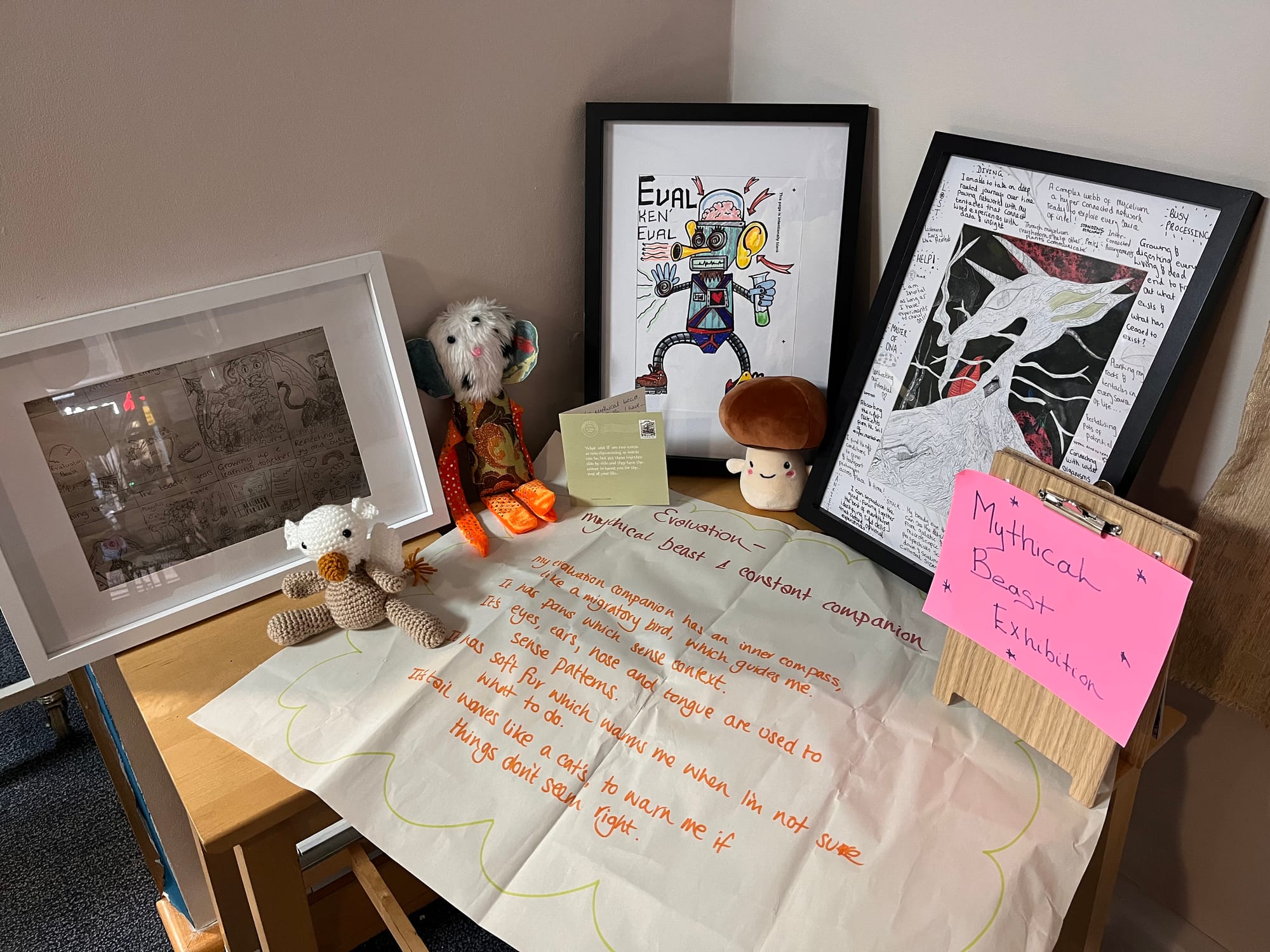
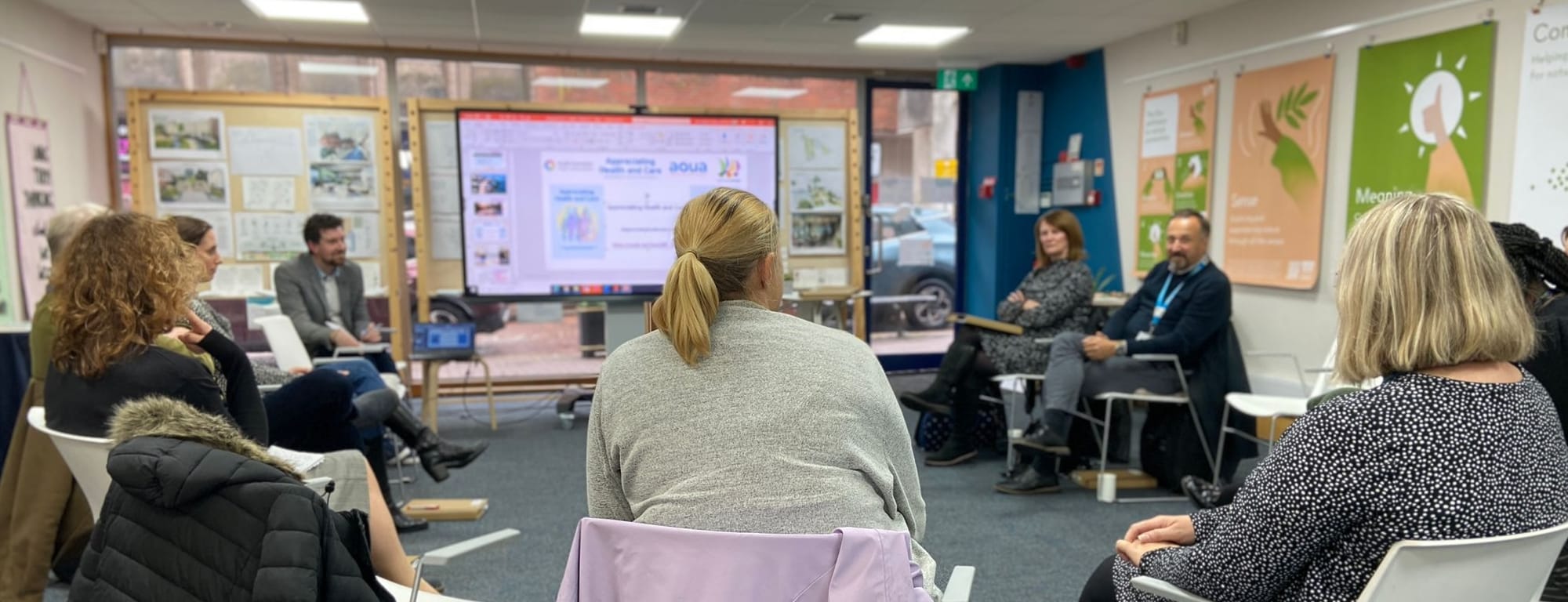
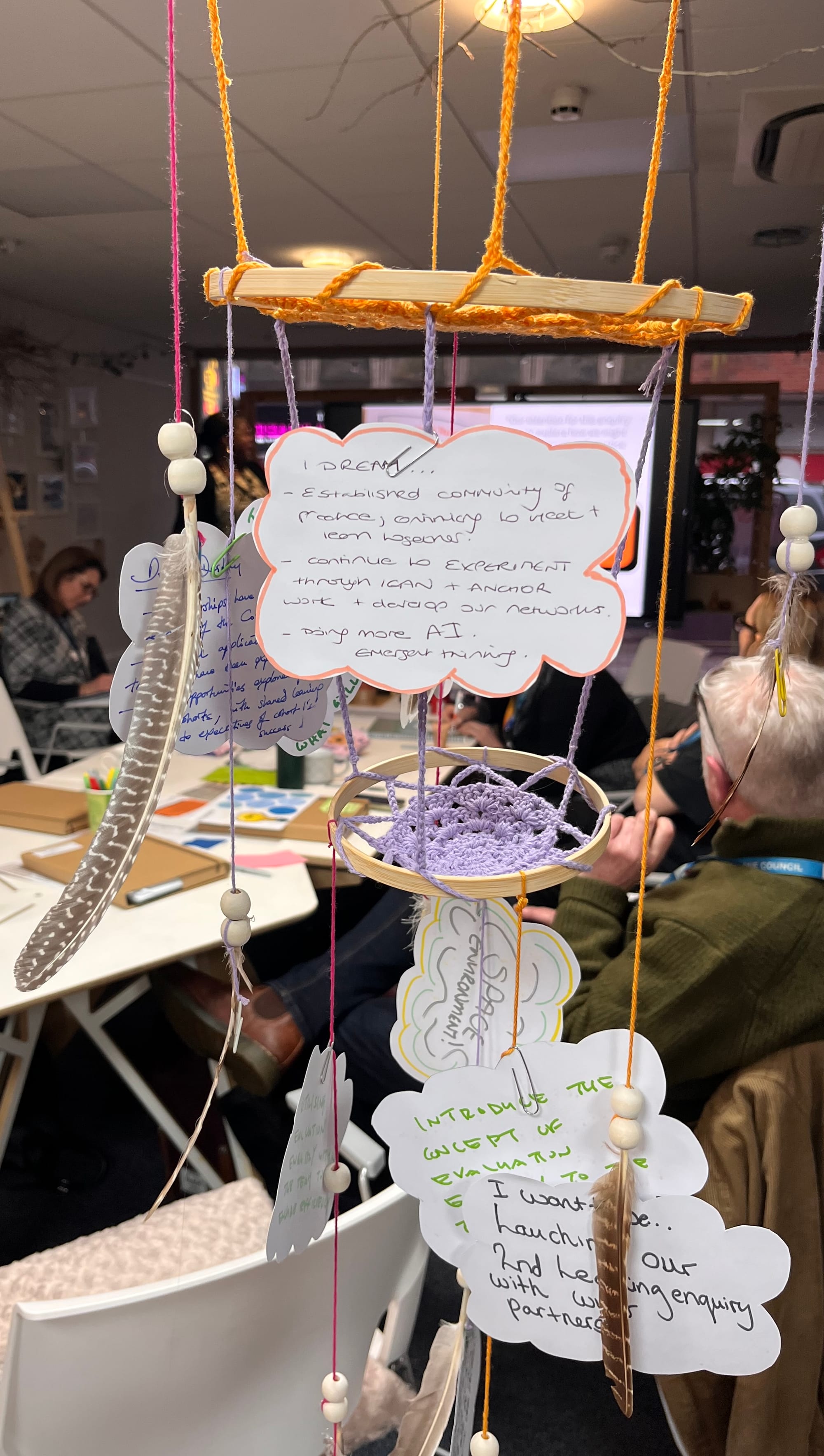
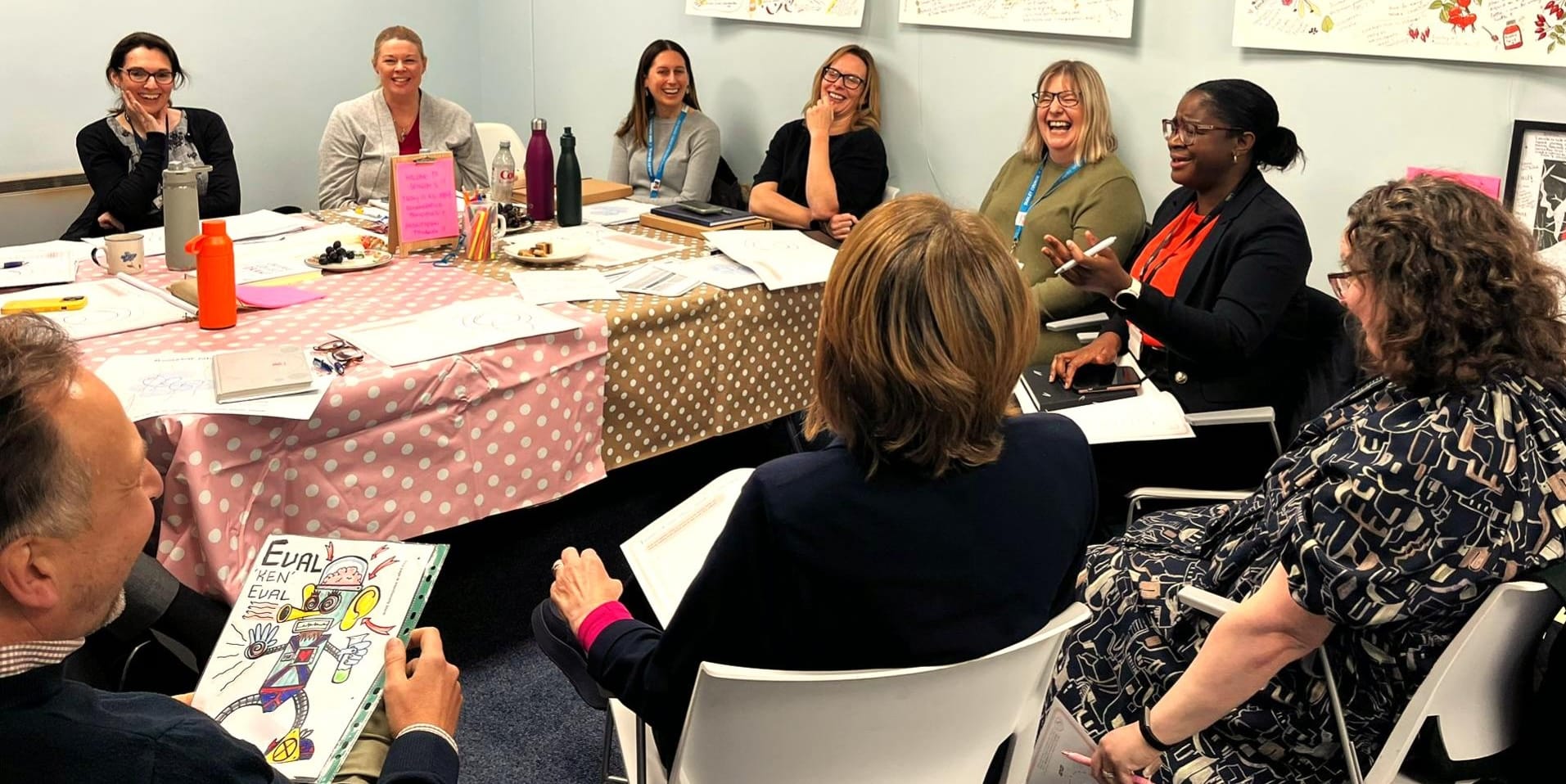
In 2025 the CoLab Dudley team were approached by colleagues from Dudley Council and the NHS to co-produce an enquiry into evaluation approaches, to help rebuild evaluation capability in their organisations. Sessions took place in our High Street lab space, very intentionally, and we shared our learning through practicing regenerative and principles-focused evaluation. You can see photos below and the enquiry documentation here.
↗ Read more about our approach to AI and digital sobriety here.