Co.LAB #3.4 — New Green Network
Student Time Rebels Jamie, Maddison and Amy returned from a High Street of the future with memories of a new green network and a transformed, pedestrianised, and sustainable High Street, and stepping stones for moving towards it.

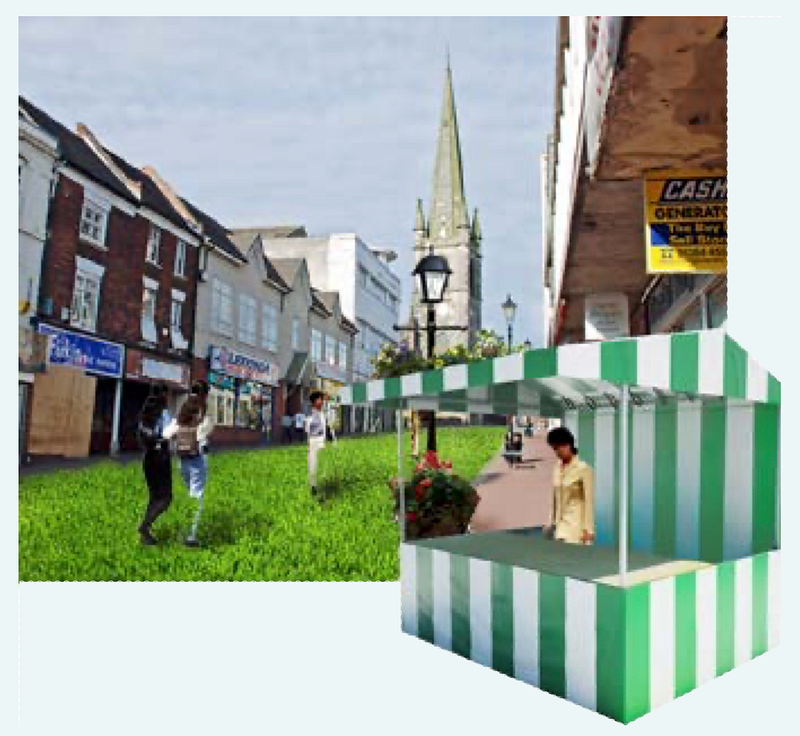
The student Time Rebels returned with memories from the future of Dudley High Street; to share stories of what they found and stepping stones of how to get there. Below is a (rough) transcript of what one of the four groups shared with their fellow Time Rebels.
Time Rebel Team 4— New Green Network
Jamie Baker, Maddison Thomas, Amy White
The current High Street is quite a dull space that is heavily populated by cars. However, Dudley High Street should be a vibrant focal point for the local community that is full of life and a place that they will want to visit.
Based on our research, we were able to narrow down some key aspects that we believed would help enhance the existing High Street. Our future goals for 2030 involve reducing the amount of cars along the High Street and making it a greener and colourful space. Below are ways we want to redevelop the High Street:
- Changing disused spaces into new greener spaces, in order to make the area more vibrant.
- Making the High Street more pedestrian friendly and lowering the amounts of pollution coming from the High Street by no longer allowing access for cars.
- Finding ways to re-use existing materials on the High Street and transform them so they can be re-used as new things. (Recycling materials)
Transforming existing spaces

There are a number of spaces within close proximity to the High Street that are not being used. These could be transformed into exciting places for the public to use. By opening these places to the public it would attract more people to Dudley and the High Street. Direct cycle routes from the High Street to these parks could also be made to help create a link between the two.
Parks offer a source of positive economic benefits. They enhance property values, increase public attraction, bring in home buyers and workers, and attract retirees. Parks are vitally important to establishing and maintaining the quality of life in a community, ensuring the health of families and youth, and contributing to the economic and environmental well-being of a community and a region.

Pedestrianised High Street

The coronavirus pandemic has shown the nation venturing outside more due to the travel restrictions in place. Daily exercise outside was one of the only reasons that people were allowed outside during the peaks of the lockdown. This resulted in large amounts of people taking up walking, jogging and cycling. We believe that this current climate will have a massive impact on how we as a nation operate. Therefore, by 2030 we feel that people will be walking and cycling to and from destinations, rather than driving.
Also another issue we faced due to the pandemic was a lack of tourism due to the international travel restrictions. We found that tourist destinations were appreciated more than our local neighbourhoods, and due to the pandemic they couldn’t even be appreciated or used because it also wasn’t permitted for us to travel out of our local areas to visit them.
Overall we feel that our local High Streets should be the focal point for our local community. They should be seen as places of interest and a place where you can go for both essential items and leisure. Therefore, we feel making the High Street pedestrianised would mean that there is a larger space to work with on the High Street and that it will not only allow locals to shop but also congregate and relax with family and friends.
Things we need to consider:
- the sizes of green spaces
- where the stalls will be located
- how will deliveries be dropped off to the shops = some form of road-like surface needed for deliveries.

Adding Sustainable Elements

Sustainable elements that will be added to Dudley High Street:
Green roofs

- Adds more colour to existing buildings.
- Helps to soak up the rain water reducing the amount of build up of run off water on the high street.
- Creates routes for wildlife
- Solar panels collect the sun to help create electricity to some of the buildings.
- Plants will help to reduce air pollution creating a healthy High Street.
Sustainable Urban Drainage

- Will be added to reduce the amount of run off water making the High Street a drier place to walk.
- Plants and trees that soak up the water best will be added down the centre of the high street to make it a greener place and to also help collect the run off water.
- Thin gravel filter drains will also be added across the cobbled high street to collect excess run off water.
Recycled materials used as furniture and decoration
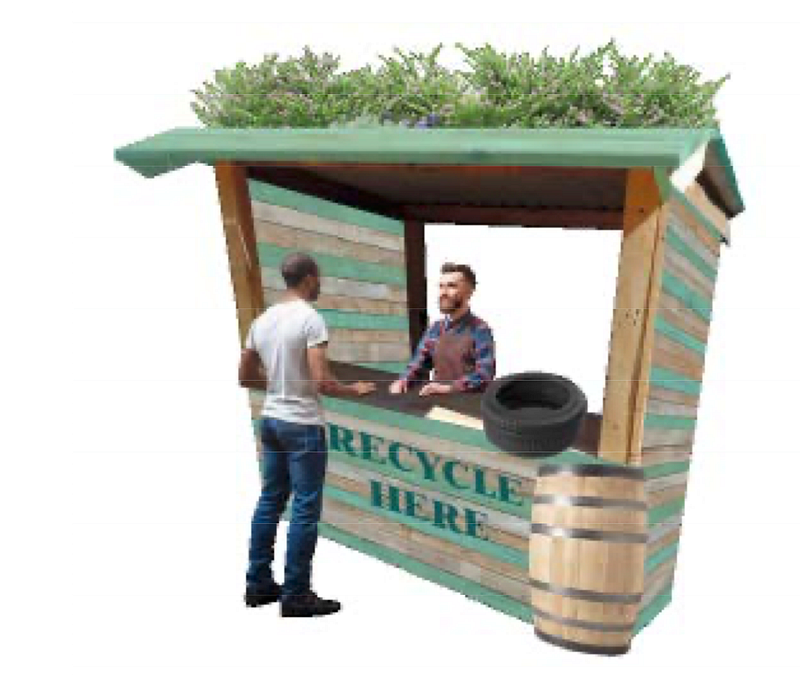
- Adds new elements to the High Street at a low costs.
- Brings the community closer together by people bringing in their unused items to be reused.
- Helps to make the High Street a more interesting place creating conversations.
Bug Hotels
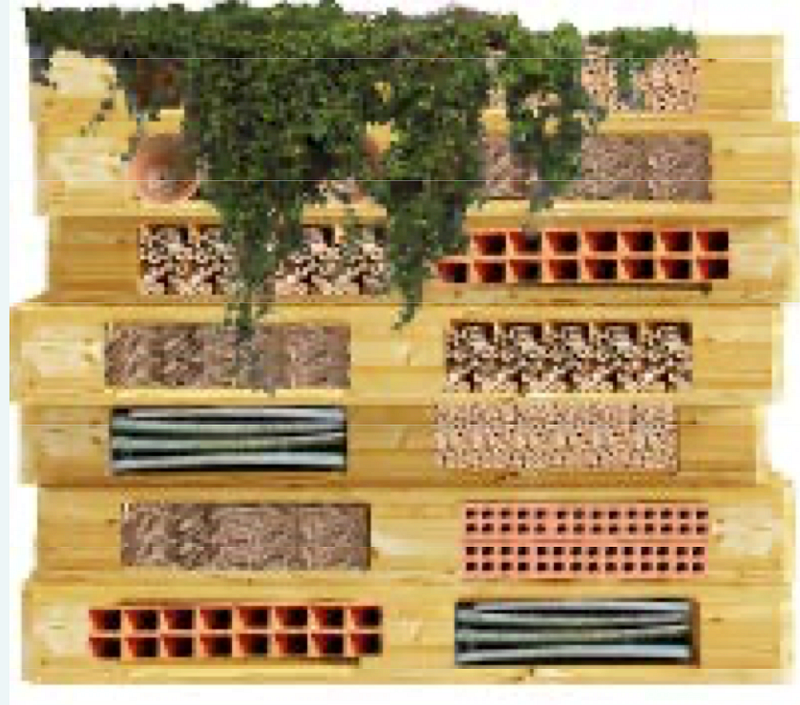
- Introduces more wildlife to the High Street making it biodiverse.
- Will be added under benches and placed in different places through out the high street.
- Map of high street will show a trail leading to the different bug hotels placed around the high street this will also link the pop up parks together.
- The hotels will be made out of recycled materials and shrubs.