Sensing place: shared sensemaking — Insights from Do Fest 2021 Time Rebel High Street experiments
“What questions does this raise about different forms of knowledge? … [Imagination] Infrastructure that seeks liberatory ends must bring…

“What questions does this raise about different forms of knowledge? … [Imagination] Infrastructure that seeks liberatory ends must bring together the heart, the mind, and the body by valuing embodied knowledges and experiences alongside their rational and intellectual counterparts.” [Olivia Oldham, on Imagination Infrastructure]
“Place and mind may interpenetrate till the nature of both is altered”
Nan Shepherd, The Living Mountain
Welcome to our shared Do Fest 2021 detectorism treasure.
These lessons and insights have been captured in three stages:
- in the preparation and co-design of the festival experiments (you can read more in the lab notes written by Time Rebels);
- during live experiments on the High Street at the festival;
- and in shared and individual reflections and ripples that have flowed post the festival.
Do Fest 2021 detectorism treasure has been shared by local festival participants, Time Rebels and lab team members via a multiplicity of sensing and sensemaking mediums that have included:
- oral histories
- sound recordings
- photographic images
- audio interviews
- video interviews (listen to Time Rebel interviews recorded at Do Fest)
- directed observation
- illustration
- walking
- mapping
- collage
- play
- poetry of place
- shared reflection
Do Fest 2021 detectorism in the wild
This Do Fest we invited Time Rebels to devise and share their detectorism for their own experiments. Inviting this wider range of perspectives and ways of knowing into the lab learning is part of the latest iteration of detectorism, called ‘detectorism in the wild’, that seeks to disrupt usual hierarchies of knowledge.
[Note: For those new to detectorism we have added a little footnote at the end of this note that outlines the what and why of a form of shared learning we call detectorism.*]
Before the festival we came together in a series of detectorism focussed Food for Thought gatherings. In these spaces Time Rebels:
- shared their detectorism superpowers (we know everyone has one!);
- we thought about the ‘why’ of our High Street experiments and the questions we wanted to explore as part of our doing and learning;
- the range of creative ways we might capture those insights, including the detectorism treasure that would already be created through the experiments (like collage or poems).
After the festival we came together again to:
- reflect upon the insights captured,
- to lift up linkages between the experiments (in terms of ideas, people and practices),
- to share post festival experiment ripples,
- and began to consider what the festival story catching and story sharing might look like
The initial insights from our shared Do Fest learning fell broadly into two categories.
- Firstly, there were lessons in terms of Time Rebel process and practice and
- Secondly, there were insights regarding the way the experiments invited new narratives of place and so new relationships with the High St that might begin to reveal new forms of stewardship.
For much much more on the evolving Time Rebel process and practice please dive in here. However, in this learning note we want to lift up the second area of insights in terms of what the Time Rebel experiments invite, provoke and inspire around:
* building new narratives and relationships with/ on Dudley High Street
* how Time Rebel experiments might begin to inspire and reveal new forms of stewardship of the High Street
Building new narratives and relationships with/ on Dudley High Street
Do Fest 2021 and Time Rebel experiments to imagine a new future for the High Street have begun forging, or perhaps revealing, new possible narratives and relationships with Dudley High Street.
During Do Fest the High Street was so much more than a sad and decaying place dominated by individuals just buying stuff.
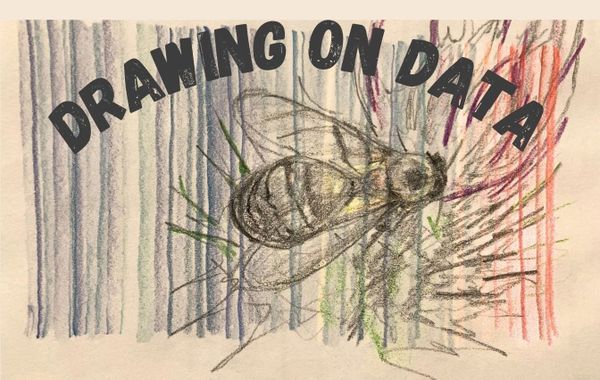
The experiments reframed the High Street as an artists’ canvas; a lab for experiments; an exhibition from the future; an archive to hold precious memories; an audiobook to share those stories; an expedition to collect and reframe artefacts; a home/haven or safe place; a living encyclopaedia of place-based wisdom and knowledge; a reason and confidence to connect with strangers; a sound library with new and existing soundtracks; a learn-play space; an art gallery; a citizen cartographers drawing board and an all round evolving creative muse.
The detectorism treasure from the experiments spoke to new relationships and emerging narratives about the High Street:
- Experiments intentionally located rebels and participants on the High Street after months on zoom or stuck in our homes. It invited a reacquaintance with and chance to see the High Street anew.
- Experiments created a reason to spend extended time on the High Street, slowing the pace you move through it, connecting with passers by, and as such disrupting some of the dominant hostile perceptions of the High Street if your experience is fleeting, solitary and superficial.
- Experiments illustrated how the High Street can be a place of discovery, surprise and curiosity not simply a place of decay that goes unloved and forgotten. They disrupted usual routines and behaviours on the High Street, sparking curiosity through the unusual, creative and playful.
- By showing the Future High Street imaginings from earlier experiments, people were inspired by stories from the future.
- Experiments created reasons to have conversations, to share memories, to share emotions, to explore and locate yourself meaningfully in place and so to better orientate and navigate the town.
- Experiments created space to share new concepts and perspectives in relation to the town or Street; to try new artforms and ways of expressing ourselves on the Street; to test ideas and imaginings in a safe way.
- Experiments also acknowledged unhappy or traumatic existing or historical relationships with this place that are rarely given space or listened to.
- Experiments reminded us all that Covid continues to shape perceptions of safety in place and being with strangers on the High Street.
How might Time Rebel experiments begin to reveal stewardship of the High Street?
The second core area of learning focuses upon what the detectorism learning tells us about how these new relationships or narratives might begin to reveal new forms of stewardship of the High Street. What does a relationship of Stewardship with the High Street look like? How might it be unlocked or triggered? Early thoughts on this stewardship relationship revealed in the prototyping of Time Rebel experiments at the festival include:
- Experiments create moments of creative freedom and joy that in turn begin a process of liberating our capacity to dream about a different purpose for the High Street that more meaningfully connects people to the High Street through that dreaming.
- Experiments that honour the past as inspiration for and integral to new creations and imaginings encourage longer term thinking and legacy mindsets.
- Experiments that create time and spaces for reflection, pause, even sanctuary creates the emotional and mental space to connect and care for the place.
- Experiments that value untold stories and forge connections via shared narratives nurture a sense of being seen, of being welcome, of being of this place and therefore nurture a sense of responsibility for it.
- Experiments that encourage the engagement of all our senses to build or reveal new relationships with the High street and its inhabitants (human and non-human) expand our capacity to fully grasp our interdependency and mutualism with all kin.
- Experiments invite curiosity and questioning via shared creative enquiry and discovery that disrupt existing framing and perspectives. This in turn perhaps begins to …
- disrupt a lack of sense of responsibility, or feelings of permission or agency to act.
Do Fest 2021 and Time Rebel experiments have so far indicated the potential of creative practice in inviting new relationships with place that are rooted in alternative narratives. These new relationships and narratives hint at the pathways to new multiple forms of stewardship of the High Street.
What the festival and early prototyping can not tell us is the journey needed from emerging new narratives and relationships to the High Street, to taking action for change to co-create an alternative future High Street? How many different (but connected) examples and pulses of activity will start to shift behavioural norms around stewardship on the High Street? What might be needed in the initial conditions to support that journey from new relationships to place to taking action for High Street stewardship?
These questions point to a longer term and macro framing of the process of change and so it is useful to take the time, using our archive of insights and range of navigation tools to ask what the learning from Do Fest 2021 adds to our understanding of this journey to a future Dudley High Street.